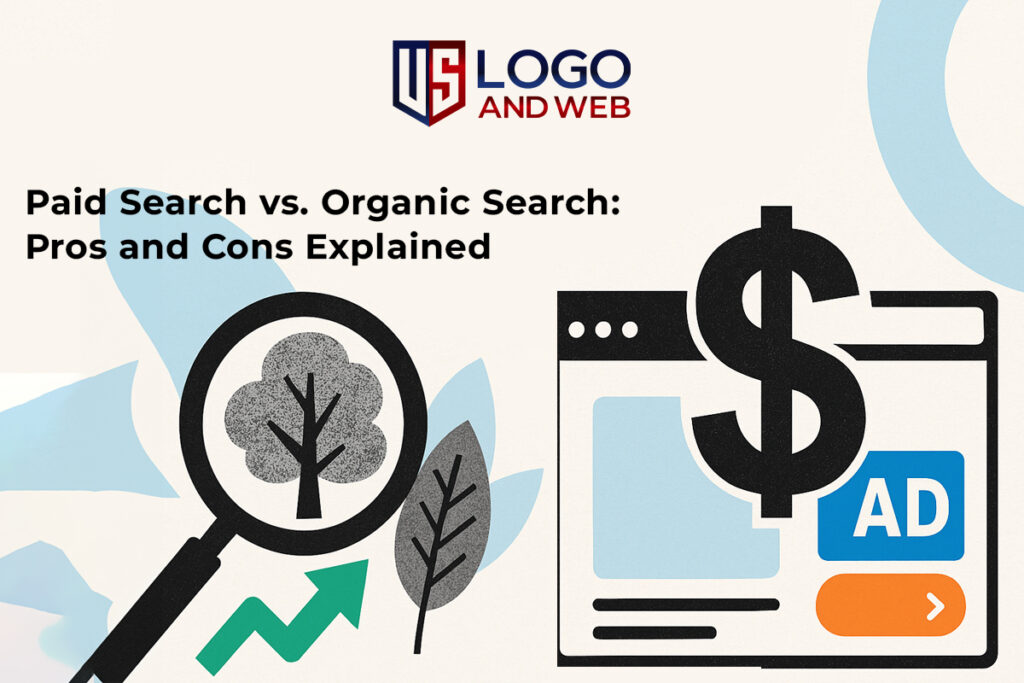
Paid Search refers to the ads that appear at the top of search engine results pages (SERPs) when you bid on certain keywords. These ads are paid for by advertisers and offer quick visibility on search engines like Google. This method can be ideal for short-term results, especially if you’re looking to promote a specific product or service. On the other hand, Organic Search refers to the free results that appear on search engines. These are determined by algorithms that evaluate factors like content quality, backlinks, and user experience. While organic results take longer to achieve, they offer long-term, sustainable traffic without ongoing costs.

What is Paid Search vs. Organic Search?
When it comes to driving traffic to your website, there are two main strategies to consider: Paid Search and Organic Search. Both methods serve a common goal: getting more eyes on your site, but they differ greatly in approach, cost, and long-term effectiveness. Understanding these differences will help you determine which approach aligns best with your business goals. In this article, we’ll break down the key features of paid search and organic search, comparing their benefits, drawbacks, and how each one can fit into your overall digital marketing strategy. Whether you’re a seasoned marketer or just starting, the insights shared here will guide you in choosing the right path for your business.
Features of Paid Search vs. Organic Search
- Cost Structure: Paid search requires an ongoing budget for bidding on keywords, while organic search costs primarily involve SEO efforts like content creation and backlink building.
- Speed: Paid search delivers quick visibility, with ads appearing almost immediately after your campaign is live. Organic search can take months to rank, but it lasts longer once achieved.
- Visibility: Paid search guarantees top search results spots. Organic search depends on how well your website ranks based on SEO efforts, with no guaranteed positioning.
- ROI Tracking: Paid search enables you to track ROI with metrics such as cost-per-click (CPC). Organic search’s ROI can be harder to measure, but tools like Google Analytics help track performance.
- Sustainability: Organic search is more sustainable in the long run as it doesn’t require continual investment. Paid search can stop yielding results once the budget runs out.
- Click-Through Rate (CTR): Studies show that organic results often have higher CTR than paid ads, especially for users who trust organic content over advertisements.
- Credibility: Organic listings are often perceived as more credible since they appear based on relevance, not payment. Paid ads may be overlooked or ignored by some users.

How to Download (Step-by-Step)
To understand how these search strategies work, follow these steps to access related tools and resources:
- Paid Search: Sign up for platforms like Google Ads and set your campaign objectives.
- Organic Search: Use SEO tools like Ahrefs or SEMrush to audit your site and track keyword performance.
- Content: For both strategies, content is king. Create high-quality content that appeals to your target audience and aligns with your keywords.
- Track & Optimize: Continuously monitor both paid and organic campaigns to improve performance.
How to Win Tips
- Focus on Quality: Whether paid or organic, high-quality, relevant content is crucial for success.
- Optimize User Experience: A fast, mobile-friendly site is key for both strategies.
- Test & Refine: For paid search, test different ad copy and keywords. For organic, regularly update your SEO strategy.
- Use Both: A balanced approach combining both paid and organic can yield the best results.
My Personal Experience
After testing both paid and organic search, I found that Paid Search helped generate quick traffic during product launches, while Organic Search created sustainable traffic growth over time. Both strategies are necessary, but finding the right balance is key to long-term success.
Pros and Cons
Paid Search Pros:
- Immediate results with high visibility
- Control over ad positioning and targeting
- Detailed performance tracking
- Flexible budget control
Paid Search Cons:
- Ongoing costs can add up quickly
- Short-term traffic that stops once the campaign ends
- Requires continuous optimization to maintain effectiveness
Organic Search Pros:
- Long-term, sustainable traffic
- Higher trust and credibility from users
- No ongoing costs after achieving rankings
Organic Search Cons:
- Slow to achieve results
- Requires significant SEO efforts
- Highly competitive in saturated markets
Conclusion
In conclusion, Paid Search vs. Organic Search both have their place in any comprehensive marketing strategy. Paid search offers fast results and targeted traffic, while organic search builds sustainable long-term success. By understanding the unique strengths of each, you can make more informed decisions that align with your business goals.
FAQs
- Which is better for immediate traffic, paid or organic search?
Paid search offers quicker results compared to organic search, which can take months to yield significant traffic.
- Is organic search worth the investment?
Yes, organic search is worth it for long-term, sustainable traffic without the need for ongoing payments.
- How much does paid search cost?
The cost of paid search varies depending on the competitiveness of keywords, but it typically works on a pay-per-click (PPC) basis.
- Can I use both paid and organic search?
Absolutely. Combining both strategies can help maximize visibility and traffic.